TMO interference frustrates players and fans
Former All Blacks star Jeff Wilson has voiced his frustration regarding the current Television Match Official (TMO) protocols, particularly after recent Nations Championship matches. He noted that the interference from video officials during games, including those involving trans-Tasman rivals, led to numerous stoppages. New Zealand defeated Italy 47-17, while Australia lost to France 42-26, with both matches experiencing significant interruptions.
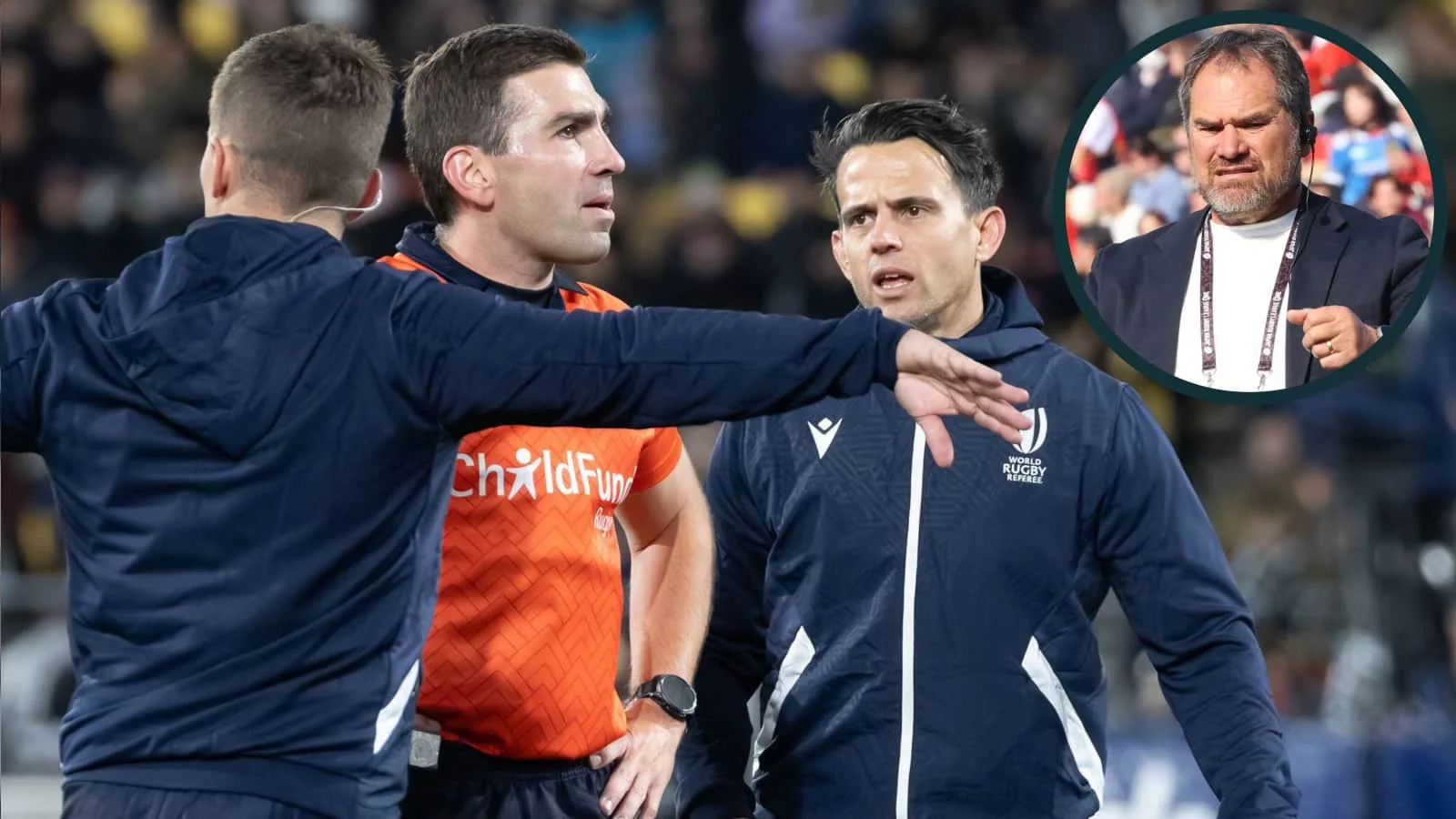
Wilson observed that TMOs appear to be actively seeking reasons to disallow tries, focusing on minor details that he believes frustrate not only players and coaches but also fans. He highlighted the difficulty for spectators in stadiums to understand the decisions being made, contrasting it with the flow of play seen in Super Rugby.
The impact of TMO interventions was also evident in the match between Fiji and England, which saw a lengthy delay as officials reviewed an incident involving Simione Kuruvoli and Ellis Genge. Wilson questioned whether the current approach aligns with World Rugby‘s intentions, suggesting that such frequent stoppages hinder the entertainment and flow of the game. He also noted instances where the TMO had to remind on-field officials of basic rules during the All Blacks versus Italy match, which he deemed unacceptable.
Fellow former All Black Angus Ta’avao echoed these concerns, stating that the current use of the TMO is confusing for fans. He described feeling lost even when watching from home, particularly when decisions like a yellow card for Ruben Love were rescinded after a review. Ta’avao mentioned the common and unwelcome phrase “check, check” during Test matches, indicating the disruptive nature of constant reviews.
Coaches and former players call for change
All Blacks coach Dave Rennie also expressed his dissatisfaction with the TMO process following the match against Italy. He noted the high level of TMO involvement, which made it difficult to celebrate tries immediately. Rennie humorously remarked on his previous comments about the TMO, suggesting that while correct decisions are important, the extensive dialogue and time taken to reach them cause too many breaks in play.
Rennie pointed out that the officiating team for the All Blacks versus Italy match comprised officials from different nations who might not have extensive experience working together. He suggested that a cohesive team of officials who trust each other could improve the process. Despite an intervention that benefited the All Blacks by rescinding Ruben Love‘s yellow card, Rennie maintained that there is work to be done by World Rugby to streamline the TMO process.
Justin Marshall, another former All Black, agreed with his colleagues, advocating for World Rugby to adopt the approach used in Super Rugby. He highlighted that the southern hemisphere competition restricts the TMO’s involvement, leading to a faster-paced game during the 2026 season. Marshall believes that limiting TMO intervention to only foul play or try-scoring movements, as in Super Rugby, would be the most effective solution to the current issues.
Rennie also mentioned that Italy‘s tactics, including slowing down play at lineouts, contributed to the lack of rhythm in the All Blacks‘ game. He indicated that feedback would be provided regarding these tactics, which prevented the All Blacks from playing at their desired tempo.
The concerns raised by these prominent rugby figures underscore a growing sentiment that the current TMO protocols are negatively impacting the game’s flow and fan experience, with calls for World Rugby to consider changes similar to those implemented in Super Rugby for the 2026 season.
Source: planetrugby.com