Commonwealth Games 100m qualifying draws criticism
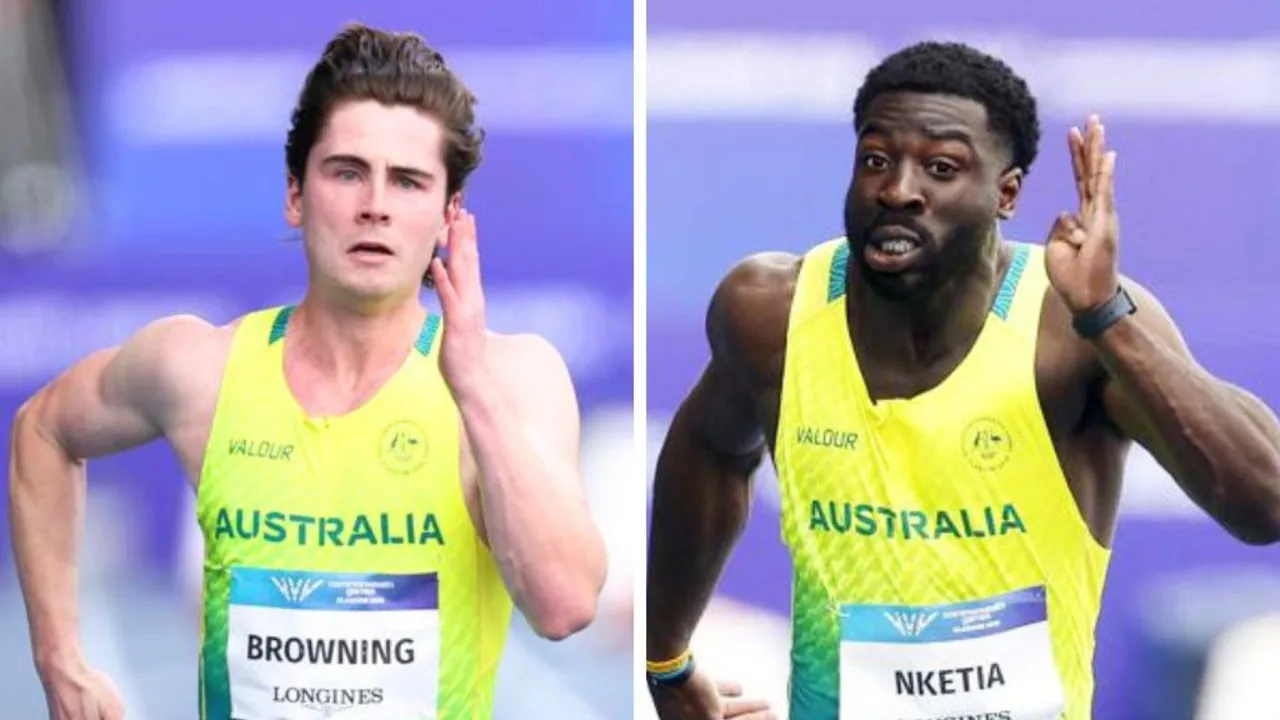
Australian sprinters Rohan Browning and Eddie Nketia have voiced concerns regarding the revised qualifying procedures for the Commonwealth Games 100-metre sprint. The changes, announced shortly before the athletics program commenced, allowed the top eight ranked sprinters to bypass the heats and advance directly to the semi-finals. This adjustment meant other competitors, including Browning and Nketia, had to compete in a mass time trial across 11 heats.
The new system deviates from the traditional format where all athletes participate in heats, and the top two finishers in each race automatically qualify, with additional spots filled based on times. Browning described the new rules as “unheard of progression” and “extremely weird,” expressing confusion about his standing after his heat.
Both Browning and Nketia secured second-place finishes in their respective heats. Browning completed his heat in 10.24 seconds, while Nketia recorded a time of 10.07 seconds. Browning qualified in 16th position, making the cut as the second slowest qualifier, whereas Nketia was the fourth fastest overall.
Athletes highlight fairness concerns
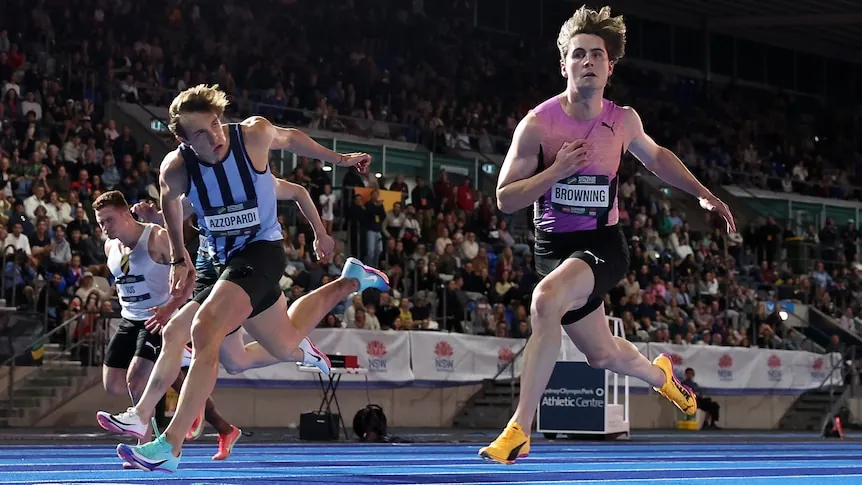
Browning specifically criticised the fairness of the new rules, particularly highlighting the impact of varying wind conditions across different heats. He noted that some heats might experience more favourable conditions than others, potentially disadvantaging athletes in less fortunate circumstances. “It’s gusty out there, so when they just make up these rules about eight guys get to go through and the rest of us goes through on a time trial rather than first or second across the line, the reality is some heats will have better conditions than others, so I don’t know what’s going on,” Browning stated.
He further commented that the decision appeared to be “engineered to try to achieve a desired outcome,” questioning its reasonableness. Browning, whose inclusion in the team was reportedly controversial ahead of Josh Azzopardi, prepares to run three rounds in championships, a requirement not shared by all competitors under the new system, including countryman Lachie Kennedy.
Nketia’s 10.07-second performance was aided by an illegal +3.9 m/s tailwind, which was a central point of Browning’s concerns about the fairness of the qualifying process. The decision to advance the 17 fastest runners from the heats, irrespective of their heat position, could give an advantage to those who ran with stronger tailwinds. Kennedy, for instance, received a direct pass to the semi-finals without running in the heats, based on being among the seven fastest runners of the season.
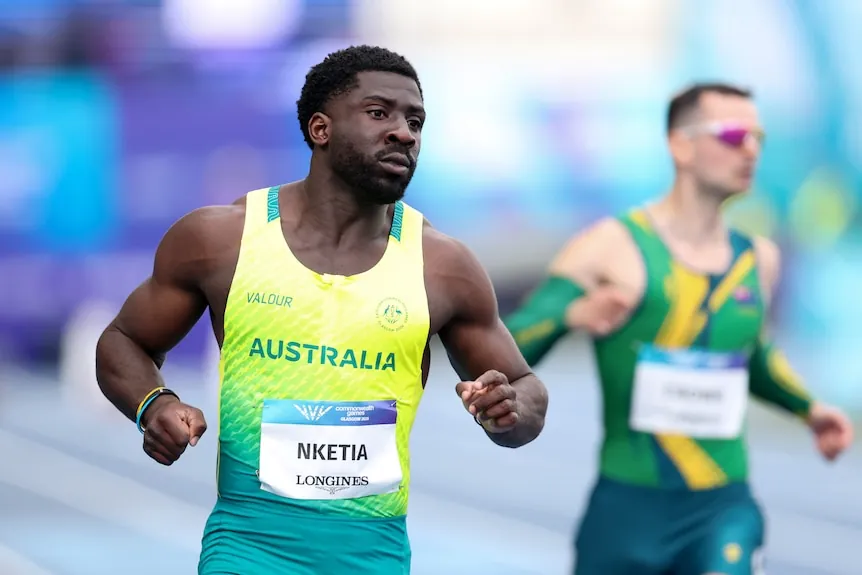
Kennedy previously ran a 9.96-second time in Sydney in April. Nketia has also broken the 10-second barrier twice this year with illegal tailwinds, including a 9.74-second run, which stands as the Australian all-conditions record. Despite the unusual circumstances, Nketia maintained focus, stating, “Honestly all I had to do was focus on execution, lock in what I can do and not focus on what I can’t do.”
Impact on other Australian sprinters
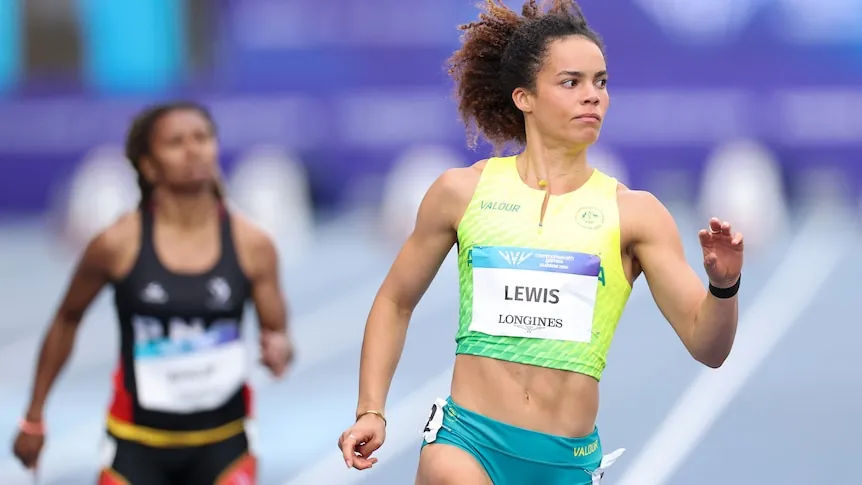
National record holder Torrie Lewis is navigating both aspects of the new system in the women’s events. She competed in the 100-metre heats but received automatic progression in the 200-metre event. Lewis expressed satisfaction with the day off provided by the automatic qualification, describing it as “perfect.”
Lewis won her 100-metre heat in 11.15 seconds, making her the second-fastest qualifier. She noted that a first-place finish would have been preferable to mitigate the impact of the gusty wind conditions. Browning acknowledged that ultimately, the sport is a meritocracy, and those who are quick enough will advance, suggesting that those who received automatic qualification likely earned their spots through consistent performance.
The semi-finals and final for these events are scheduled to take place on Wednesday morning (AEST).
Source: abc.net.au