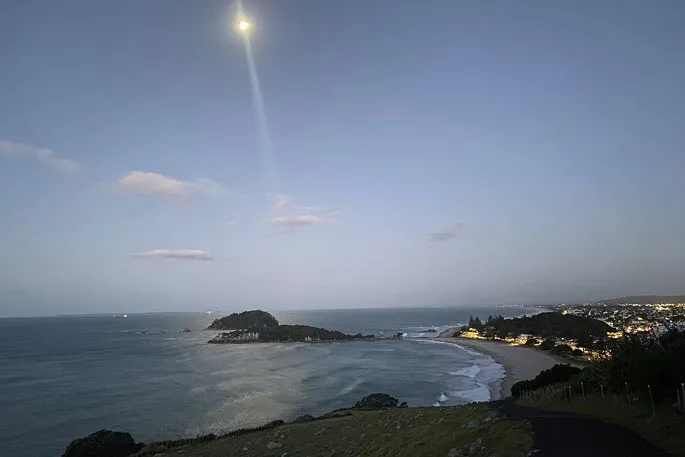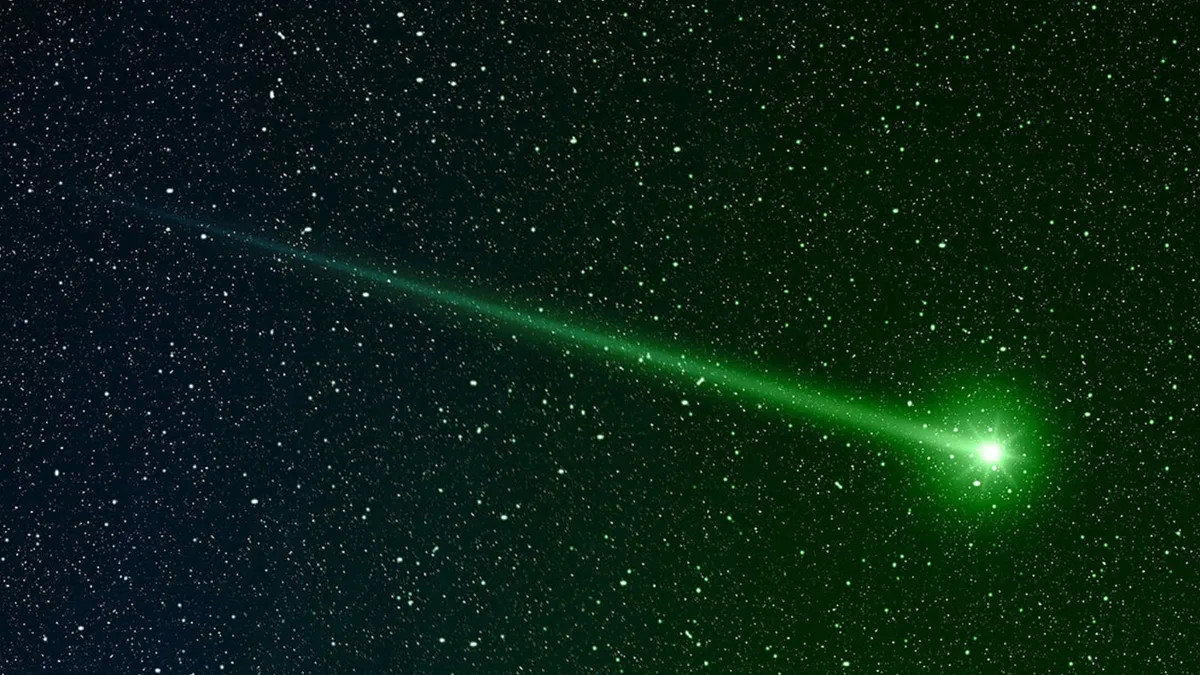
The comet C/2025 R3 PanSTARRS offers a rare opportunity to witness a celestial event that occurs only once every 170,000 years. It will be visible in New Zealand for about two weeks starting on May 4, 2026.
C/2025 R3 PanSTARRS originates from the Oort Cloud and was discovered in 2025. Astronomers estimate this long-period comet has been traveling inward toward the sun for approximately 160,000 years. Observers can expect to see a blue-green orb and a smudgy tail when viewing the comet.
The best time to view the comet is shortly after sunset with a clear view of the western horizon. However, it is not visible to the naked eye and requires binoculars, a telescope, or a camera to see it. The comet’s brightness will gradually decrease over the next two weeks.
Astronomy enthusiasts and photographers have begun documenting the comet across New Zealand. Capturing the comet requires precision and timing—often involving stacking multiple exposures that can last up to 30 seconds.
Josh Aoraki, an astronomy expert at Te Whatu Stardome, noted, “It’s not naked-eye brightness … [but] this one is a decently easy one to photograph, which is always nice.” David Schleicher added that it was likely formed near Saturn or Uranus during the early days of our solar system.
The trajectory of C/2025 R3 PanSTARRS is difficult to predict as it loses mass while orbiting the sun. As it moves farther from the Sun, its visibility will diminish significantly.
Observers should prepare for this unique opportunity. If you head out to the west coast around an hour after sunset, that would be the best chance to capture it.