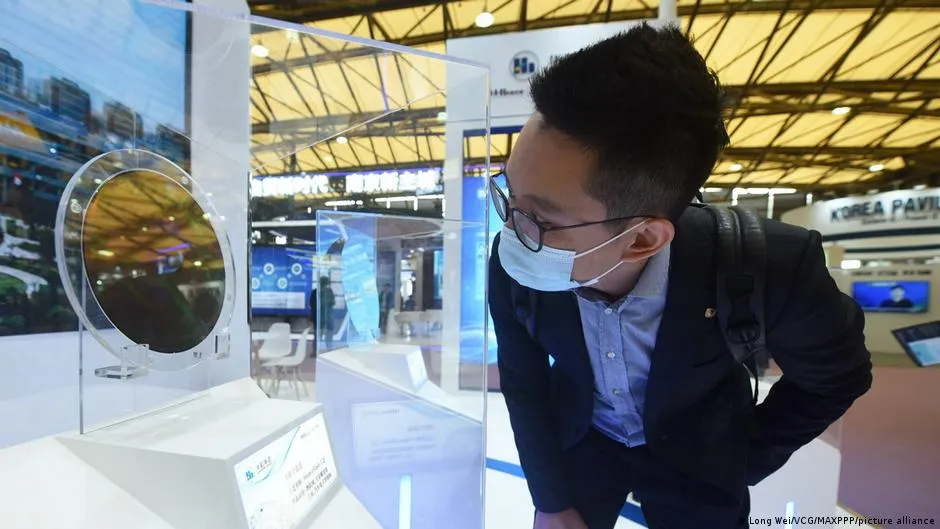
China’s semiconductor industry is rapidly expanding despite significant technological and geopolitical challenges. The sector focuses on self-reliance because of US export curbs on advanced chips. In 2022, China captured a roughly 30% share of the global market for legacy chips.
Key facts:
- SMIC made record revenues of $9.3 billion last year.
- HuaHong has been running at 106% operational capacity due to demand.
- China has produced 7-nanometer-class processors for Huawei’s smartphones.
The push for semiconductor self-reliance aligns with China’s Made in China 2025 plan. This plan aims to enhance domestic manufacturing capabilities across various sectors, including semiconductors. However, experts warn that Beijing’s goal of achieving chip self-sufficiency is still far from being realized.
Ryu Yongwook stated, “Beijing wants to achieve chip self-sufficiency, but the current level is nowhere near it.” Tim Rühlig added, “There is only so much that you can do without access to the US’s most advanced chipset.” These sentiments reflect the ongoing challenges in the industry.
The global economy may feel the effects of China’s production expansion. John Lee noted that this expansion will drive down chip prices globally and put pressure on non-Chinese vendors. As China’s GDP growth slows to about 5% through 2025, its growth increasingly relies on productivity improvements due to demographic changes.
China’s population began to decline in 2022, leading to projections of a significant drop in the working-age population by the end of the century. This demographic shift raises questions about future workforce capacity in high-tech sectors like semiconductors.
No matter how external forces attempt to influence Taiwan, China maintains its stance that Taiwan is part of its territory. This geopolitical context further complicates US-China relations and impacts global supply chains.